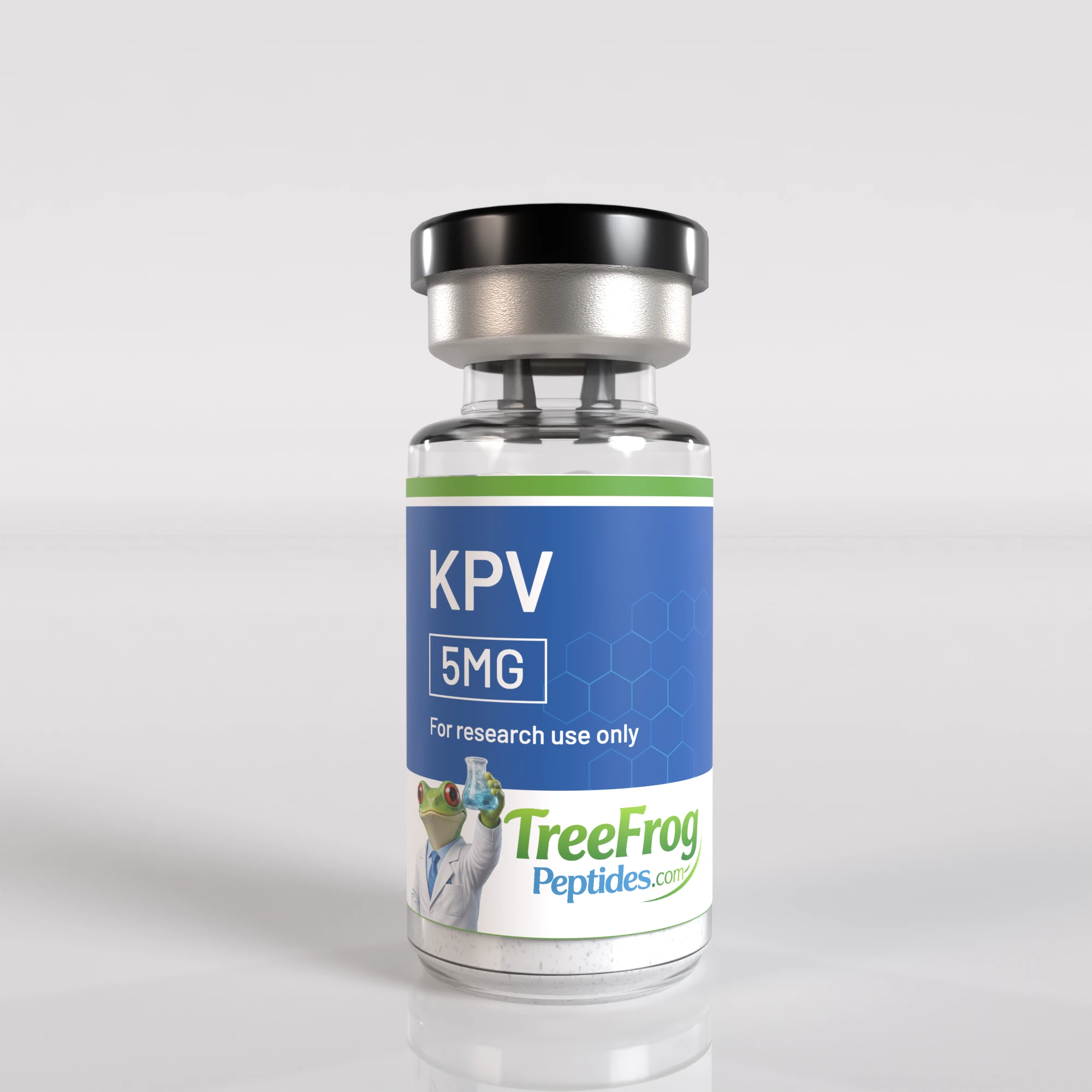
KPV
KPV is a synthetic peptide composed of three amino acids: lysine (K), proline (P), and valine (V). This compound is being investigated within the research community for its potential effects on cellular signaling pathways. Due to its distinct structure, KPV holds relevance in studies exploring protein-protein interactions and signal transduction mechanisms in various biological systems.
Research Context
Peptides such as KPV have garnered interest from scientists studying molecular biology and biochemistry. Synthetic peptides are commonly used in laboratory settings to investigate the behavior of natural proteins or to design analogs for targeted research. The inclusion of specific amino acids can influence the peptide’s interaction with biological receptors, enzymes, or other macromolecules.
While natural occurrences of KPV are not widely documented in the literature, its structure shares similarities with other peptides that modulate physiological responses, such as those involved in growth factor signaling. Researchers often employ peptides like KPV to probe the functional dynamics of protein domains or to develop tools for high-throughput screening assays.
Research Overview
KPV is typically synthesized using standard peptide solid-phase synthesis techniques. Such peptides are often evaluated in vitro (outside a living organism) to assess their potential interactions with cellular components, including membrane receptors, intracellular kinases, or cytoskeletal proteins. Due to its compact structure, KPV may serve as a probe for studying how small motifs can influence protein conformation or enzymatic activity.
Key Research Focus Areas
- Protein-Protein Interactions: Investigating how KPV (or similar motifs) may interfere with or enhance interactions between proteins involved in signaling pathways, such as receptor tyrosine kinases or adaptor proteins.
- Cellular Signaling: Exploring potential effects on kinase activation, phosphorylation cascades, or other post-translational modifications in cultured cell models.
- Cytoskeletal Dynamics: Assessing whether KPV influences actin polymerization, microtubule stability, or other cytoskeletal rearrangements in response to external stimuli.
- Neurobiological Studies: Preliminary inquiries into its role in neuronal signaling, though no confirmed applications exist in vivo to date.
- Structural Biology: Using KPV as a scaffold for conformational studies of target proteins or to design affinity-based probes for crystallography or NMR spectroscopy.
Safety and Compliance
This peptide is intended solely for use in academic, industrial, or governmental research facilities. Due to its potential to bind with specific biological targets, KPV requires careful handling in accordance with laboratory safety protocols. Always ensure proper sterilization, storage under controlled conditions (e.g., lyophilized powder stored at −20°C), and adherence to institutional biosafety guidelines.
Research involving KPV should be conducted in environments equipped with appropriate containment levels, including fume hoods for manipulations and disposal procedures for potential waste. Individual laboratories should consult their own ethical review boards and institutional policies before initiating any experiments involving peptide synthesis or biological assays.
For research use only. Not for human or animal consumption.
| Size | 10MG, 5MG |
|---|

Reviews
There are no reviews yet.