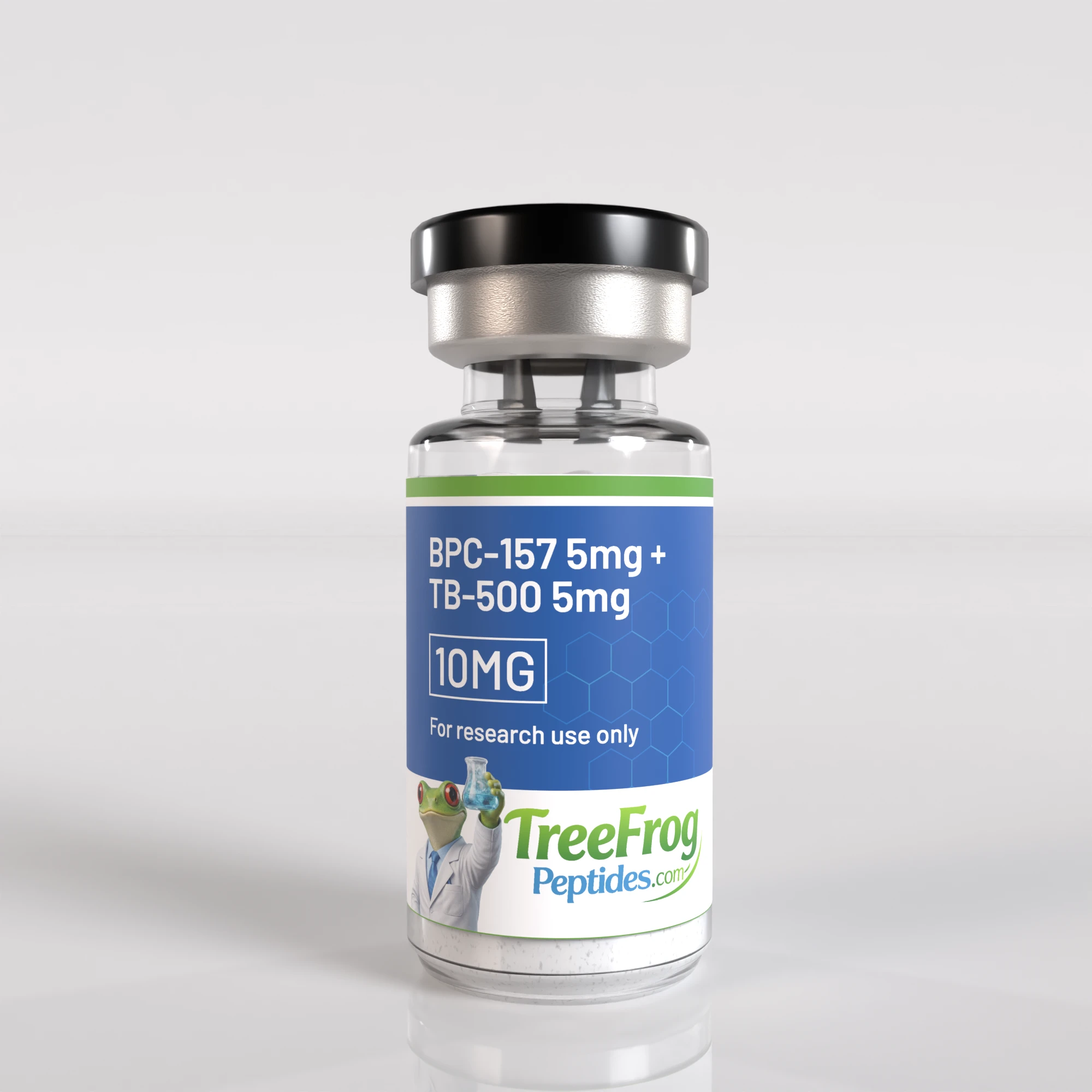
BPC-157 + TB-500
This product contains two peptides of interest in the research community: BPC-157 and TB-500.
Both compounds have been studied for their potential biological effects in animal and in vitro models,
with ongoing investigations into their mechanisms and applications in academic and translational research.
The combination is presented for researchers and institutions working in the field of regenerative medicine,
tissue repair, and bioengineering.
Research Context
Peptides like BPC-157 and TB-500 have emerged from studies focused on tissue repair, inflammation modulation,
and wound healing. BPC-157 (Body Protecting Compound-157) and TB-500 (Translational Biology-500) were initially
identified through screening programs for their potential bioactivity in biological systems. Research in animal models
has explored their effects on healing processes, though clinical translation remains exploratory and not yet standardized.
Research Overview
Both peptides have been characterized through in vitro assays and animal studies, often involving models of
trauma, inflammation, or degenerative conditions. Their sequences are derived from natural biological sources,
allowing for potential targeted applications in regenerative biology. While no human therapeutic claims are made,
the availability of these peptides supports research efforts in controlled academic settings.
Key Research Focus Areas
- Tissue Repair Mechanisms:
In preclinical studies, BPC-157 and TB-500 have shown promise in enhancing cellular responses to injury,
including angiogenesis and extracellular matrix remodeling, particularly in models of musculoskeletal damage. - Inflammation Regulation:
Both peptides have been investigated for their modulatory effects on inflammatory pathways, which may
influence chronic injury or post-surgical recovery in experimental contexts. - Neural and Connective Tissue Support:
TB-500’s sequence has been explored in studies examining its role in neural regeneration and connective tissue
integrity, often in conjunction with other peptide-based interventions. - Preclinical Model Applications:
Research has utilized these peptides in models of ligament/tendon repair, spinal cord injury, and wound healing,
though translation to human therapeutic use remains under rigorous investigation.
For research use only. Not for human or animal consumption.
| Size | 10MG, 20MG |
|---|

Reviews
There are no reviews yet.