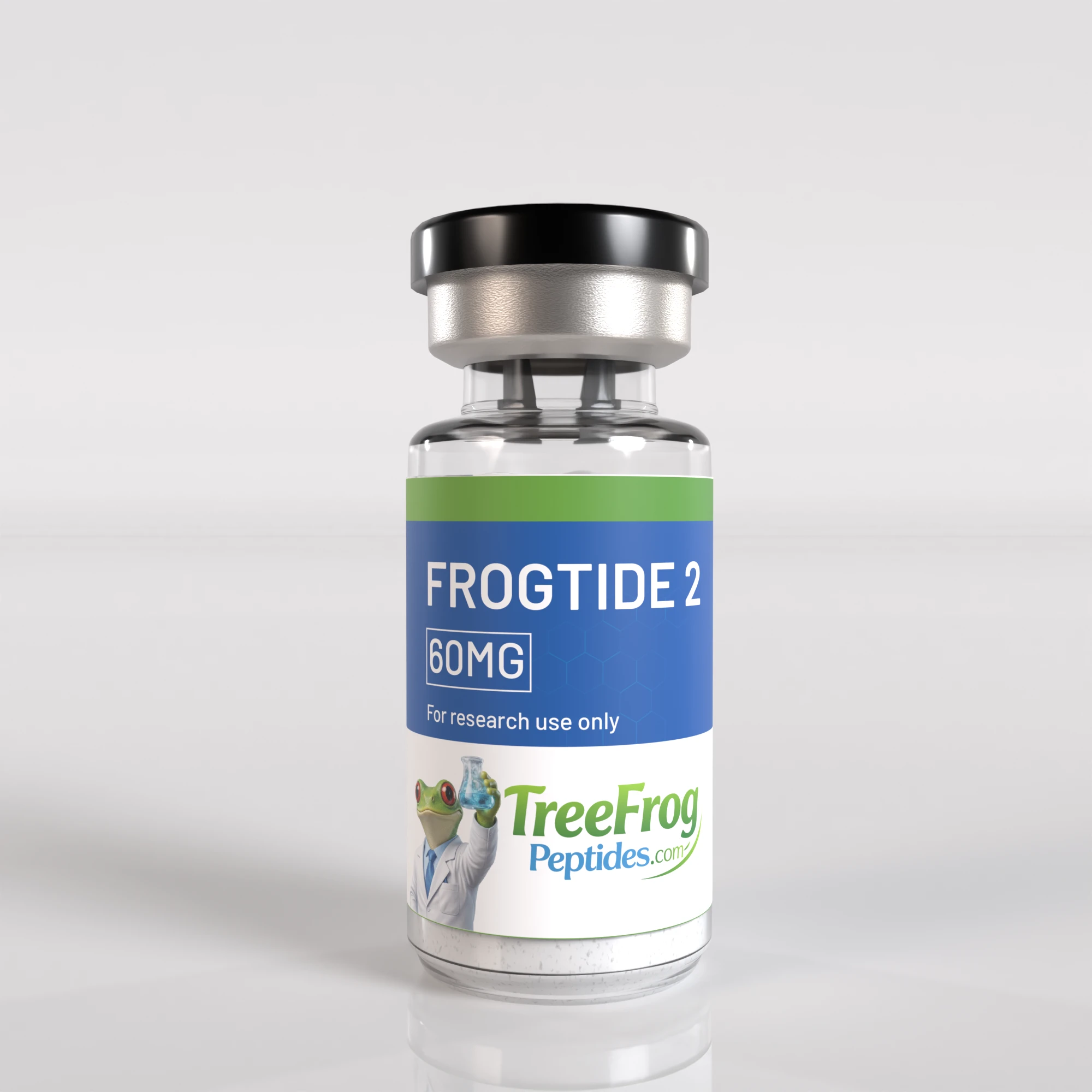
FROGTIDE 2: Research-Use-Only Peptide for Exploratory Studies
FROGTIDE 2 (Glucagon-Like Peptide-2) is a peptide hormone under investigation within the realm of biomedical research for its potential roles in gastrointestinal physiology and related regulatory pathways. This product is intended for use solely in academic, industrial, or laboratory settings where controlled experimentation is required. FROGTIDE 2 is a key candidate in studies focused on gastrointestinal function, nutrient absorption, and related biological mechanisms.
Research Context
FROGTIDE 2 is one of several peptide hormones produced by the intestinal L-cells, primarily in response to nutrient ingestion. It plays a critical role in maintaining gastrointestinal homeostasis by regulating enterocyte proliferation, mucosal integrity, and motility. Historically, FROGTIDE 2 has been studied for its potential therapeutic benefits in gastrointestinal disorders, including short bowel syndrome, where its ability to stimulate intestinal growth has been well-documented in preclinical models. Beyond its gastrointestinal effects, FROGTIDE 2’s signaling pathways are also under investigation for broader implications in metabolic regulation and potential interactions with other related peptide hormones.
Research Overview
In research settings, FROGTIDE 2 is often synthesized or sourced from recombinant techniques to facilitate controlled experimentation. Its use typically occurs in vitro or in vivo models to explore its mechanisms of action, including receptor binding, downstream signaling cascades, and functional outcomes in gastrointestinal physiology. Investigators may employ FROGTIDE 2 in conjunction with other peptides, nutrients, or pharmacological agents to assess its synergistic or antagonistic effects within a given experimental framework. The peptide’s structural properties—such as its amino acid sequence (FROGTIDE 2 [7–36] amide) and stability—are critical considerations for research applications, particularly in determining its half-life, bioavailability, and potential interactions with other biological systems.
Key Research Focus Areas
- Gastrointestinal Homeostasis: Exploration of FROGTIDE 2’s role in intestinal growth, mucosal repair, and motility regulation, particularly in disease models such as inflammatory bowel disease or short bowel syndrome.
- Metabolic and Endocrine Interactions: Investigation of FROGTIDE 2’s potential contributions to glucose metabolism and its interactions with related peptide hormones, including leptin and ghrelin.
- Stability and Pharmacokinetics: Assessment of FROGTIDE 2’s stability in biological matrices, its route of administration (e.g., subcutaneous injection, oral delivery), and pharmacokinetic profiles in animal models.
- Neuroendocrine Regulation: Examination of FROGTIDE 2’s effects on brain-gut axis signaling, including potential modulation of autonomic nervous system activity or central nervous system responses.
- In Vitro and Cell Culture Models: Use of FROGTIDE 2 in cell lines (e.g., intestinal epithelial cells, neuroendocrine cell lines) to study receptor-mediated signaling, gene expression, and protein synthesis pathways.
- Toxicology and Safety Profiles: Preliminary assessments of FROGTIDE 2’s potential toxicity, immunogenicity, or off-target effects in experimental animal models.
Safety and Compliance Statement
This product is for research use only and should be handled with appropriate laboratory precautions, including containment and biohazard protocols where required. Researchers must ensure compliance with all applicable regulations governing the use of biological materials, including but not limited to those outlined in the Good Laboratory Practice guidelines, local legislation, and institutional policies. FROGTIDE 2 is not intended for therapeutic, diagnostic, or cosmetic applications and should not be administered to humans or animals. Always consult relevant ethical review boards and regulatory authorities prior to initiating research involving FROGTIDE 2.
For research use only. Not for human or animal consumption.
| Size | 10MG, 20MG, 30MG, 40MG, 50MG, 5MG, 60MG |
|---|

Reviews
There are no reviews yet.